Twelve Years After Google Glass, We’re Still Missing the Bigger Picture: Smart Glasses Could Change Millions of Lives
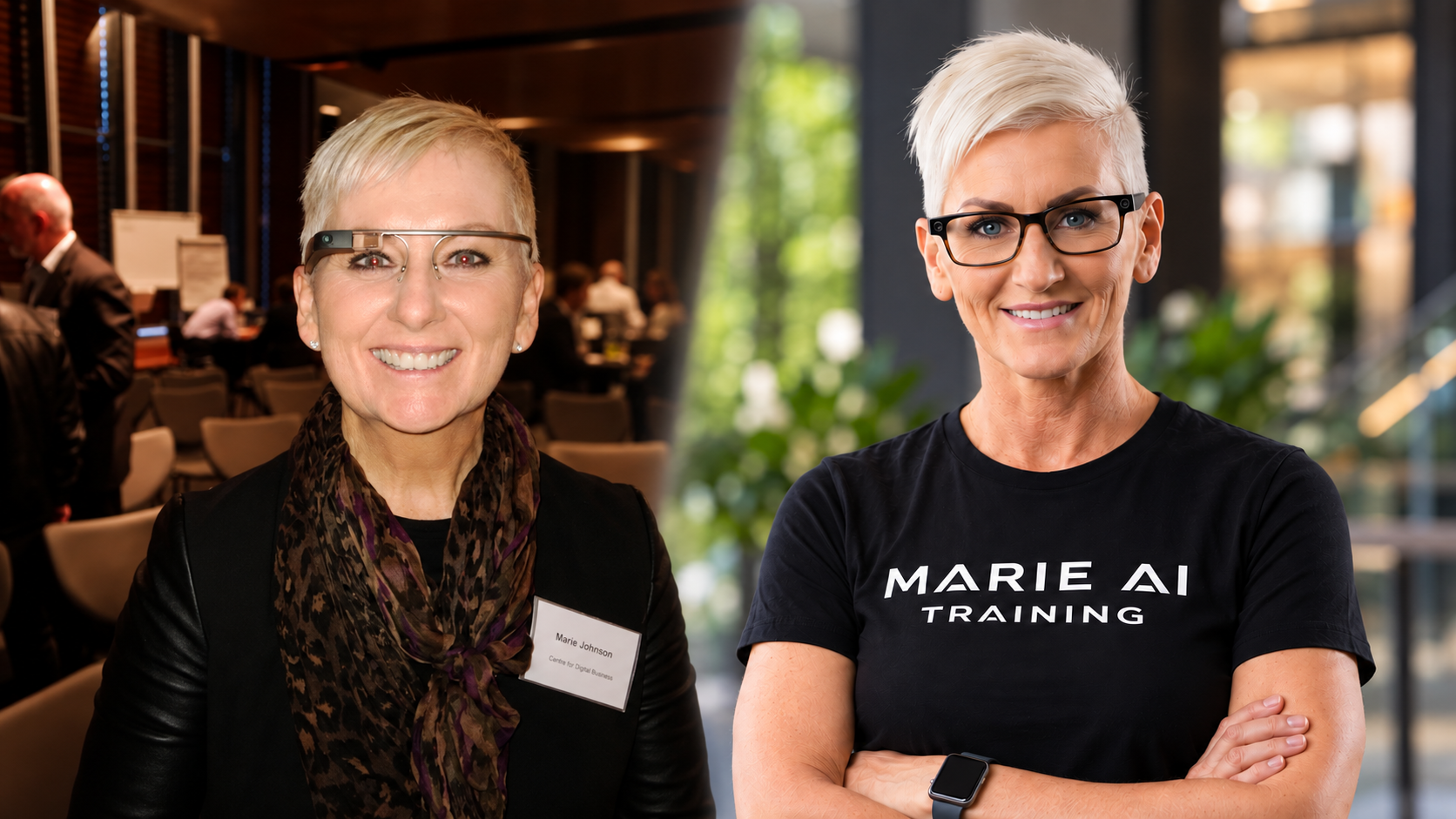
On the left, that’s me trying Google Glass in 2014, convinced that this new technology was not just a curiosity, but a new way for people to access services and experience the world. On the right is MarieAI, my Digital Human, wearing smart glasses today. Twelve years separate these images. What connects them is a conviction I had then and hold even more strongly now: technology worn in our field of perception could change how we experience everyday life.
Twelve years later, the Australian Government is considering a ban on smart glasses in Commonwealth offices and service centres.
I find myself asking: are we really going to meet this extraordinary moment by closing the door? I would like to encourage a different perspective: a far more expansive view of this technology. Look up and out at what these glasses could and will make possible. Who these could help (and, no, the “AI for good” use case is not just blind people).
What could smart glasses make possible for people with disability? For an ageing population? For anyone who has ever struggled to read, hear, navigate or make sense of the complex information surrounding them?
The web is all around us. The web is not confined to a website.
We encounter information throughout the physical world: on signs, medicine bottles, blood pressure machines, nutrition labels, transport displays and forms handed to us across a counter. Being able to access and understand that information is part of being able to participate, live independently, and experience human agency.
Imagine glasses that can read a medicine label aloud. Help you interpret the display on a blood pressure machine. Translate a sign or a conversation. Explain a nutrition label. Support wayfinding through an unfamiliar building and navigation to the right service desk.
Now imagine the same assistance when you turn to a government or healthcare website. An AI agent could explain a complicated form in plain language, help you understand what is being asked and guide you through completing it. For someone with tremors or a movement disorder, hands-free assistance could be life-changing. For people with dyslexia, low literacy, or with cognitive impairment, these glasses would literally open the door to the complex world of web information on government websites, education and healthcare.
So why shut the door with a ban?
Imagine the “industry” of accessible web design - all the consultants, training courses, standard setting - being upended by the smart glass technology as it becomes ubiquitous. The question is: who and what is the accessibility industry actually designing for, when in fact the great majority of government and healthcare websites, apps and services are grossly inaccessible.
I wrote about this kind of possibility in my book on Nadia, the world's first AI powered Digital Human for service delivery designed together with people with disability. The aim was to help people understand and use services on their own terms. Technology can meet people where they are, across the physical and digital worlds.
And yet, there is extraordinary pushback against these enabling technologies. A few weeks ago, I spoke out against the public shaming of smart glasses wearers shown in an Instagram video filmed on what appeared to be a London Underground train.
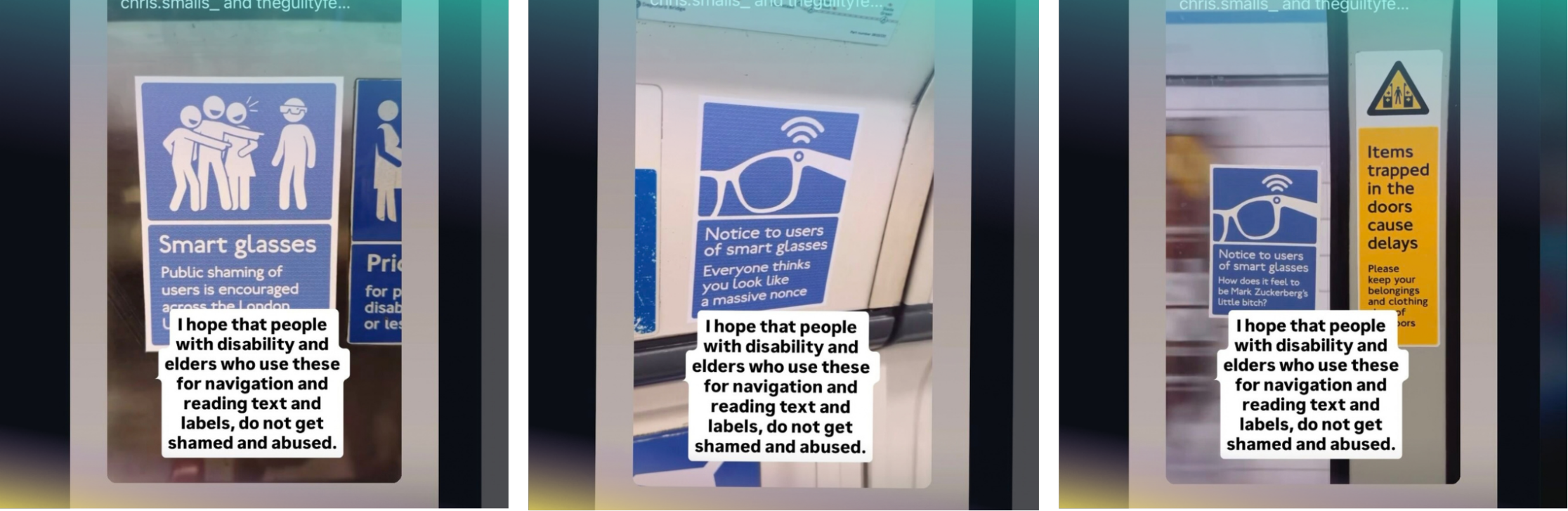
I asked people to think about those using glasses for navigation and reading text and labels. I worried about the person using glasses to navigate or read text being treated with suspicion simply for wearing them.
For those who say "yeh, but what about the perverts" - what say you about people using smart phones, Go Pros on top of bike helmets, other recording devices and the like.
Smart glasses are hardly the only devices capable of recording. We live among smartphones, small cameras, audio recorders, microphones, AI scribes and dash cams. I use all of these. Dash cams have shown us that recording can also be valuable evidence and a source of protection. Singling out glasses risks making the device the entire conversation while we miss what it could do for people.
What ignorant commentators choose not even to consider, is that smart glasses facilitate SAFETY from all the abuse and public shaming that is being advocated. In recent times, CardiacMan was physically assaulted - punched on the head by a cyclist while we were walking around Lake Burley Griffin in Canberra. CardiacMan was walking slow, he has tremors, and I was walking with him. The cyclist was clearly impatient because we couldn’t get out of the way quick enough as he approached us at speed from behind - and reached out and punched CardiacMan in the head as he sped past. We reported the incident to police, but while we both always carry our iPhones, we did not have the time to get them out and take a photo before the arsehole sped off. Smart glasses would have recorded all that in real time. Our personal dash cam if you will.
The future goes further still. As the technology develops, smart glasses that combine visual and hearing assistance may become indistinguishable from ordinary glasses. That is an extraordinary prospect: support that travels with you, available when you need it, without announcing itself to the world as “assistive technology”. Imagine useful support travelling with you through the physical and digital world, available when you need it.
So let’s ask bigger questions. How could these tools help an older person remain independent? How could they make a government or healthcare service easier to use? How could they help someone read, interpret, translate and navigate the world around them? And how can these tools keep EVERYONE safe.
My family will soon have smart glasses in our technology and AI ecosystem. I am excited by what that will make possible, and I am grateful for the inventors of this technology.
Twelve years ago, I was trying Google Glass, not as a cool thing to do, but convinced of its immense potential. Today, smart glasses have moved into everyday life. Imagine what they’ll be able to do twelve years from now, and how many millions of people will have built their independence and experienced more of life through them.
That is the scale of the seismic shift already underway. And there is no shutting the door.